


Developmental psychologist Erik H. Erikson (1902-1994) was best known for his theory on social development of human beings, and for coining the phrase identity crisis.
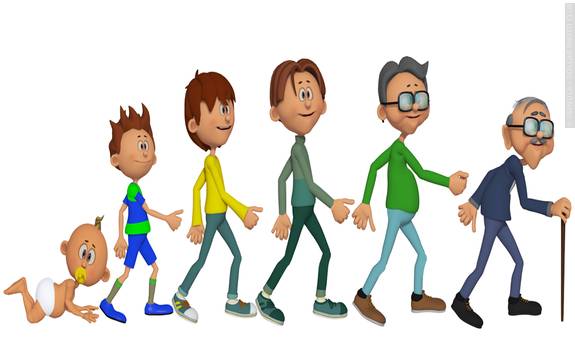
The theory describes eight stages through which a healthily developing human should pass from infancy to late adulthood. In each stage the person confronts, and hopefully masters, new challenges. Each stage builds on the successful completion of earlier stages. The challenges of stages not successfully completed may be expected to reappear as problems in the future.
| (Approx. ages) Stage & Psychosocial crisis | Significant relations | Psychosocial modalities | Psychosocial virtues | Maladaptations & malignancies |
|---|---|---|---|---|
|
(Approx. ages) Stage & Psychosocial crisis |
Significant relations |
Psychosocial modalities |
Psychosocial virtues |
Maladaptations & malignancies |
|
(0-1) |
Mother |
to get, |
hope, |
sensory distortion |
|
(2-3) |
Parents |
|
will, |
impulsivity |
|
(3-6) Initiative vs guilt |
Family |
to go after, |
purpose, |
ruthlessness |
|
(7-12) Industry vs inferiority |
Neighborhood and school |
to complete, |
competence |
narrow virtuosity |
|
(12-18) Ego-identity vs role-confusion |
Peer groups, role models |
to be oneself, |
fidelity, loyalty |
fanaticism |
|
(20-45) |
Partners, friends |
to lose and find oneself in a |
love |
promiscuity |
|
(30-65) |
Household, |
to make be, |
care |
overextension |
|
(50+) Integrity vs despair |
Mankind or "my kind" |
to be, |
wisdom |
presumption |
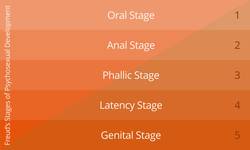
Erikson's ideas on how we grow up as create identities is in contrast to Freud's, who proposed sexual motives behind our behaviour.