

Sign In   New User? Sign Up

Psychology Forums Click here for more information Psychologist World: Psychology articles, tests, approaches, explanations and more

  Behavioral  Biological  Body Language  Cognitive  Disorders  Dreams  Emotion  Freud  Memory  Personality  Sleep  Stress  Tests  Sign Up

  Psychologist World

ElementHome

ElementSign In
ElementSign Up

  Browse by Category:

ElementBehavioral Psychology
Approach, Aversion Therapy, Conditioning, Flooding, more...

ElementBiological Approach

Approach, Brain Explorer, Biology & Behavior, Lobotomy, Narcotics, more...

ElementBody Language
Reading Body Language, Truth Signals, Non-Verbal Signals, Self Image, more...

ElementCognitive Psychology

Cognitive Approach, more...

ElementDevelopmental Psychology

Developmental Overview, Attachments

Element Disorders (Mental)
Depression, OCD, Narcolepsy, Phobias, PTSD, Schizophrenia, Synesthesia, more...

Element Dreams
Interpret Your Dreams Guide, Dream Symbols, Nightmares, Why do we dream?, more...

ElementEmotion

Attraction, Emotion Guide, Love, Types of Love, Anxiety, Jealousy, Narcissism, Pride Emotion, Self Pity Emotion, Vanity Emotion, more...

ElementFreud
Sigmund Freud, Evaluation,

Free Association, Personality Type Test, Psychosexual theory, more...

ElementHumanistic Approach
Approach Overview

ElementMemory

Association, Conditioning, Rehersal, Levels of Processing, Flashbulb Memory, Forgetting, Memory Improvement, Working Memory Model, more...

ElementPersonality

Conforming in Groups, Authority, Brainwashing, Influence of Language, Social Influence, more...

ElementSleep

Sleep Deprivation, Sleeping Disorders, Stages of Sleep, more...

ElementStress

What is Stress?, Anger Test, Fight or Flight Response, Karoshi, Stress Management, Stress Test, more...

ElementPersonality Tests
Are you Fixated?, Personality Type TestAnger Test, Stress, Depression & Anxiety Test, more...

View all articles...


  Site Information:

ElementLink to this Page

ElementAbout this Site

ElementRevision Articles

ElementSupport

ElementSite Map

ElementPrivacy Statement

ElementPsychology Forums

ElementSign Up

Home

Element

Biological Psychology

Element

Serotonin

Element

Serotonin

Page Tools:

Printable Version

Link to this Page

Share with a Friend

Email
How does Serotonin work?

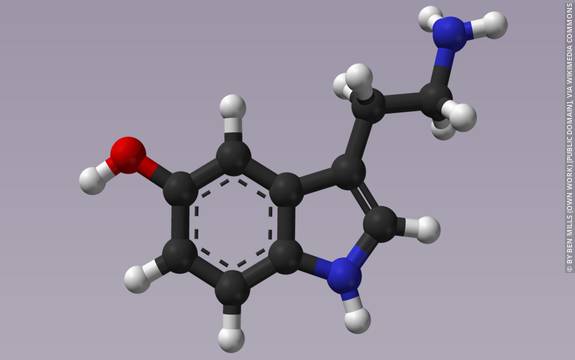
Serotonin (5-hydroxy-tryptamine, or 5-HT) is a monoamine neurotransmitter synthesized in the central nervous system.


What does it do?

Serotonin is believed to play an important part of the biochemistry of depression, bipolar disorder and anxiety. It is also believed to be influential on sexuality.


Serotonin taken orally is not passed into the serotonin pathways of the brain. Since it is such an important regulating chemical, the blood-brain barrier prevents serotonin in the blood stream from directly affecting serotonin levels in the brain. However, the amino acid tryptophan and its metabolite 5-hydroxytryptophan — which serotonin is synthesized from — are capable of crossing the blood-brain barrier. These chemicals are readily available as dietary supplements and may be effective serotonergic agents.


Other ways of working around the blood-brain barrier include a variety of psychiatric medications that affect serotonin levels indirectly, including MAO inhibitors, tricyclic antidepressants, and SSRIs. The last category includes the well known antidepressant fluoxetine (trade name: Prozac®).


The MAO inhibitors prevent the breakdown of serotonin and therefore increase concentrations of the neurotransmitter in the brain. MAO inhibitors interact harmfully with many foods (which contain amines) and drugs and have a long list of side effects.


How it works

After serotonin is released by a neuron it activates receptors located on adjacent neurons. Serotonin can be taken up again by the neuron that released it, sometimes for reuse. Some drugs inhibit this re-uptake of serotonin, again making it stay in the synapse longer. The tricyclic antidepressants inhibit the re-uptake of both serotonin and norepinephrine. The newer Selective Serotonin Re-uptake Inhibitors (SSRIs) have fewer (though still numerous) side effects and fewer interactions with other drugs.


Deficient (and sometimes, excessive) intake of various dietary minerals and vitamins can lead to disturbed levels of serotonin via disrupting either the production or reuptake processes.


Care must be taken in any attempt to increase serotonin levels, as a dangerous condition known as serotonin syndrome may result. This is especially a concern if multiple sertonergic drugs may interact.


Serotonin is found extensively in the human gut, as well as in the blood stream.


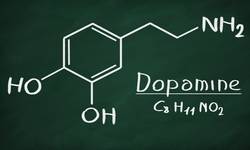
See also: Dopamine

Source: 1


Tags: serotonin, neurotransmitters


Keep Up-to-Date:

Email New Articles via Email:

RSS New Psychology Articles via RSS

Sign Up for Full Access:

Access hundreds of theories, approaches, study and experiment overviews, plus a range of psychology guides. Sign Up


More in Biological Psychology:


Behavioral Psychology
Biological Psychology
Body Language Reading
Cognitive Psychology
Developmental Psychology
Dreams
Emotions
Freudian Psychology
Influence & Personality Psychology
Memory
Personality Tests
Psychology Issues
Sleep Psychology
Stress Management


Browse Areas:

Behavior

Biological Psychology

Body Language

Cognitive Approach

Dream Interpretation

Freudian Psychology

Influence & Personality

Mental Disorders

Memory Psychology

Psychology Tests

Sleep Psychology

Stress Management


By Approach:

Biological Approach

Behavioral Approach

Cognitive Approach

Humanistic Approach


By Psychology Study:

Studies Index


Issue Reference:

Obsessive Compulsive Disorder

Post Traumatic Stress Disorder

General Anxiety Disorder

Seasonal Affective Disorder
more...


Self Help Psychology:

Succeed in Exams

Memory Improvement


Click here for more information.


Psychologist World:

ElementHome Page

ElementPsychology Articles
ElementPersonality Tests
ElementFreudian Psychology
ElementPsychology Forums
ElementMemory Improvement

ElementFree Newsletter Email
ElementMore...


Psychology Areas:

ElementBehavioral

ElementBiological

ElementBody Language

ElementCognitive

ElementDevelopmental

ElementDisorders

ElementDream Interpretation

ElementEmotions

Areas (Continued):

ElementEmotion

ElementFreud

ElementHumanistic

ElementMemory

ElementPersonality

ElementSleep

ElementStress

ElementPersonality Tests

Site Stuff:

ElementAbout Us
ElementContact Us
ElementPrivacy Statement 
ElementSupport 
ElementSite Map

ElementWhat's New RSS
ElementLink to this Page

ElementSign Up

Most Read in August:

ElementEye Reading
ElementBehavioral Approach

ElementStress Test
Element
Neuroticism Test

ElementHow Angry Are You?

ElementFight-or-Flight Response
ElementBody Language
ElementMemory

© 2006-2010 Psychologist World and partners. Parts licensed under GNU FDL. Terms of Use